


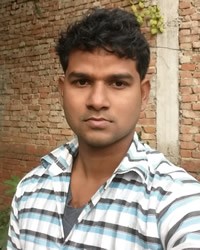

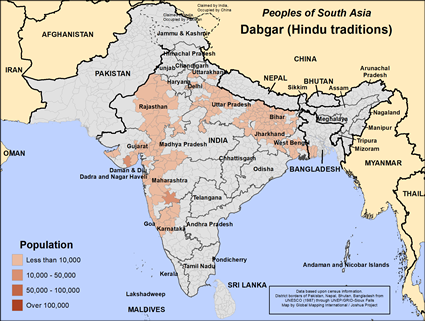
The Dabgar trace their origin to Rajput clans who used to make shields of leather for use in battle. Their traditional primary occupation has been the tanning of animal hides.
Today the Dagbar people can be in many vocations, but they are more likely to be makers of umbrellas and musical instruments. Others are day laborers.
The recreational life of the Hindu Dabgar community of India is generally simple and closely connected to their social and cultural environment. Because many Dabgar families are engaged in labor-intensive occupations, such as leatherwork and related trades, leisure time is often limited. As a result, recreation is usually experienced through shared community activities rather than individual pursuits.
Evenings often provide opportunities for relaxation after the day's work is complete. During this time, men may gather in small groups to talk, share news, and discuss community matters. Women also spend time together, often combining social interaction with household tasks such as food preparation or childcare. These informal gatherings play an important role in strengthening relationships and maintaining a sense of unity within the community.
Weddings and family ceremonies also serve as significant recreational events. These gatherings are often lively and include music, traditional songs, and feasting. They bring together extended families and neighbors, reinforcing social bonds and providing a setting for shared enjoyment and cultural expression.
Music and dance are meaningful parts of Dabgar recreational life, particularly during festivals and celebrations. Traditional forms may be performed, reflecting their cultural heritage and maintaining continuity with past generations. Children and young people typically engage in simple games and outdoor activities, often in groups, using whatever space and resources are available.
Hindu festivals are among the most important forms of recreation for the Dabgar. As followers of Hindu traditions, they participate in major festivals such as Diwali, Holi, and other regional celebrations. These occasions are marked by joyful expressions of faith, including singing, dancing, and communal meals. Festivals provide a break from routine labor and create opportunities for the entire community to come together in celebration.
The Dabgar people are Hindus. A Brahmin fixes the date and time for betrothals and marriage. Their community goddess is Ashpura. The Nai, Garo Brahmin and Rawal (for drum beating) assist them in their life-cycle rituals.
The Hindu Dabgar of India face a range of social, economic, and spiritual needs that shape their daily lives and future prospects.
Economically, many Dabgar families need stable and sustainable sources of income. Their traditional occupation in leatherwork has often placed them at the lower end of the social and economic structure, limiting opportunities for advancement. As markets change and industrial production increases, demand for traditional skills may decline. This creates a need for diversified employment opportunities, vocational training, and access to fair wages so that families can improve their standard of living.
Educationally, the Dabgar need greater access to quality schooling for their children. Limited education has often restricted their ability to move into new forms of work or engage fully with wider society. Increased literacy and educational attainment would provide opportunities for social mobility and help break cycles of poverty.
Socially, the Dabgar continue to need greater acceptance and inclusion within the broader community. Because of their historical association with low-status occupations, they have often experienced discrimination and marginalization. Efforts that promote dignity, equality, and community integration would help address these ongoing challenges.
In terms of health and daily living, many Dabgar communities need improved access to healthcare, clean water, and basic services. Like many marginalized groups, they may live in conditions where such resources are limited, affecting overall well-being and quality of life.
Pray for Christian workers who know how to communicate the gospel orally to be sent to the Dabgar people in the Lord's timing. Pray for spiritual hunger that will give them the willingness to embrace Jesus Christ no matter what the cost. Please pray this low status people group would be able to improve their standard of living in the years ahead.
Scripture Prayers for the Dabgar (Hindu traditions) in India.
https://en.bharatpedia.org/wiki/Dabgar#:~:text=The%20Dabgar%20are%20a%20Hindu%20caste%20found%20in,Rajasthan%2C%20the%20community%20prefer%20to%20call%20themselves%20Dhalgar.
https://en.wikipedia.org/wiki/Dabgar
| Profile Source: Joshua Project |



